

In 2026, businesses are investing more than ever in visually appealing websites, yet many still struggle to convert visitors into customers. A modern layout, sleek graphics, and polished branding may create a strong first impression, but without a strategy behind website design for lead generation, even the best-looking website can fail to produce real business results.
Many companies focus heavily on aesthetics while overlooking critical factors like user experience, SEO structure, conversion optimization, mobile responsiveness, and clear messaging. The result is a website that looks impressive but does little to generate inquiries, calls, or sales.
A high-performing website should do more than attract attention. It should guide users toward action, build trust quickly, and support long-term growth through smart SEO and conversion strategies. Businesses that ignore these elements often face low engagement, high bounce rates, and poor lead quality.
In this blog, we will explore why your website may not be generating leads and how strategic improvements in design, SEO, and user experience can transform it into a powerful business growth tool.
A Beautiful Website Does Not Automatically Mean a Successful Website
Many businesses confuse aesthetics with performance. While design matters, users care more about whether your website solves their problems quickly and clearly.
Modern consumers make decisions fast. Studies consistently show users form opinions about a website within seconds. If they cannot immediately understand what your business offers, who it serves, and why they should trust you, they leave.
This is why website design for lead generation has become more important than simply creating visually attractive pages.
Your website should answer these questions immediately:
- What does your business do?
- Why should someone trust you?
- What problem do you solve?
- What action should the visitor take next?
If your site fails to communicate these answers clearly, visitors rarely convert.
Your Website Prioritizes Design Over User Experience
One of the biggest mistakes businesses make is focusing too much on appearance while ignoring usability.
Complicated navigation, excessive animations, cluttered layouts, and slow-loading elements may look impressive but often frustrate users.
In 2026, user expectations are extremely high. Visitors expect websites to load quickly, work perfectly on mobile devices, and provide information instantly.
Common UX Problems That Hurt Leads
- Slow page speed
- Confusing menus
- Too many pop-ups
- Difficult mobile navigation
- Tiny text or poor readability
- Unclear service descriptions
- Hidden contact information
A good-looking website should also function effortlessly. This is where lead generation website design becomes critical. The design should support the user journey rather than distract from it.
Your Messaging Is Too Generic
Many websites sound exactly the same.
Businesses often use vague phrases like:
- “We provide quality services”
- “Customer satisfaction guaranteed”
- “Innovative solutions for your business”
The problem is that these statements do not explain what makes your company different.
Strong messaging is essential for websites that generate leads. Visitors need clear, specific information that directly addresses their needs.
Better Messaging Builds Trust
Instead of generic statements, focus on:
- Specific outcomes
- Industry expertise
- Proven results
- Unique processes
- Real customer pain points
For example, instead of saying “We build modern websites,” say:
“We build conversion-focused websites that help small businesses generate more calls, bookings, and qualified leads.”
Specific messaging creates clarity, and clarity improves conversions.
Your Website Lacks Strong Calls-to-Action
Many businesses forget to guide visitors toward the next step.
A website should never leave users wondering what to do next. Every important page should include a clear and visible call-to-action (CTA).
Examples of Effective CTAs
- Request a Free Quote
- Schedule a Consultation
- Get a Website Audit
- Book a Discovery Call
- Contact Our Team Today
Weak CTAs like “Learn More” or “Submit” often reduce conversions because they lack urgency and value.
Strategic CTAs are a major part of website design for lead generation because they move users deeper into the sales funnel.
Your Website Is Not Optimized for Mobile Users
Mobile traffic now dominates most industries. If your website performs poorly on smartphones, you are losing leads daily.
Google also prioritizes mobile-first indexing, meaning mobile usability directly impacts rankings.
Signs Your Mobile Experience Needs Improvement
- Buttons are difficult to tap
- Text appears too small
- Images load slowly
- Layout breaks on smaller screens
- Forms are hard to complete
A responsive website is no longer optional. Businesses that ignore mobile optimization typically experience higher bounce rates and lower conversion rates.
Modern conversion-focused web design ensures users can navigate smoothly across every device.
Your Website Is Missing SEO Strategy
Even the best-designed website will fail if people cannot find it online.
This is why SEO remains essential in 2026. Search engines continue to prioritize websites that provide fast, relevant, trustworthy, and user-friendly experiences.
Many businesses invest in design but completely overlook SEO structure.
Important SEO Elements That Affect Lead Generation
- Keyword optimization
- Search intent targeting
- Internal linking
- Fast-loading pages
- Optimized metadata
- Quality content
- Mobile usability
- Local SEO signals
For many companies, especially local brands, SEO for small business is one of the most cost-effective long-term marketing strategies available.
Without SEO, your website depends heavily on paid advertising or referrals for traffic.
Your Website Does Not Build Trust Quickly Enough
Trust is one of the biggest factors in online conversions.
If users feel uncertain about your credibility, they will leave before contacting you.
Trust Signals That Improve Conversions
- Customer reviews
- Testimonials
- Case studies
- Certifications
- Before-and-after projects
- Industry awards
- Clear contact information
- Secure HTTPS connection
Modern buyers research businesses carefully before making decisions. Websites that generate leads consistently establish authority early in the user journey.
Adding trust elements throughout your site can significantly improve conversion rates.
Your Forms Are Too Long or Complicated
Many businesses unintentionally create friction during the lead capture process.
Long forms often reduce submissions because users lose interest or feel overwhelmed.
Best Practices for Lead Forms
- Ask only essential questions
- Keep forms visually simple
- Use clear labels
- Optimize forms for mobile
- Reduce unnecessary fields
- Include reassurance messaging
Shorter forms generally improve conversion rates, especially for service-based businesses.
The goal of high-converting website design is to make the user experience as easy and frictionless as possible.
Your Website Loads Too Slowly
Speed directly affects user behavior and search rankings.
A slow website damages credibility and increases abandonment rates. Studies continue to show users leave websites quickly when pages take too long to load.
Common Causes of Slow Websites
- Oversized images
- Poor hosting
- Excessive plugins
- Heavy animations
- Unoptimized code
- Large video backgrounds
Fast-loading websites improve both SEO and user experience.
This is particularly important for businesses competing locally because users often compare multiple companies before making contact.
You Are Attracting the Wrong Traffic
Not all traffic is valuable.
Some businesses generate website visits but fail to convert users because they are targeting the wrong audience.
Your website content should align with user intent.
Examples of Misaligned Traffic
- Informational visitors landing on sales pages
- National traffic for local-only services
- Broad keywords attracting irrelevant users
- Content that does not match buyer intent
Effective website conversion optimization focuses on attracting qualified traffic that is more likely to become customers.
Your Website Does Not Clearly Explain Your Services
Many business websites assume visitors already understand their services.
This creates confusion and reduces engagement.
Every service page should clearly explain:
- What the service includes
- Who it helps
- Why it matters
- What results customers can expect
- Why your business is different
Clear service pages improve SEO, trust, and conversions simultaneously.
A strong website design company understands how to structure service pages for both search engines and real users.
Your Website Has No Content Strategy
Content remains one of the most powerful tools for online lead generation.
Businesses that regularly publish valuable content often see stronger search visibility and increased authority.
Content That Supports Lead Generation
- Educational blogs
- Service guides
- FAQs
- Case studies
- Industry insights
- Location-based content
High-quality content supports SEO for small business while also nurturing potential customers during the research stage.
In 2026, businesses that ignore content marketing often struggle to compete organically.
You Are Not Tracking Website Performance Properly
Many businesses have no idea why their website underperforms because they are not analyzing user behavior.
Tracking tools help identify where visitors drop off and which pages convert best.
Important Website Metrics to Monitor
- Bounce rate
- Conversion rate
- Session duration
- Mobile usability
- Traffic sources
- Landing page performance
- Form submissions
Data-driven decisions are essential for improving lead-focused website strategy.
Without analytics, businesses often rely on assumptions instead of actual user behavior.
Why Lead Generation Requires More Than Good Design
A successful website combines multiple disciplines together:
- Design
- SEO
- UX
- Content strategy
- Conversion optimization
- Technical performance
- Mobile responsiveness
- Trust building
Businesses that focus only on visuals usually struggle with conversions because aesthetics alone do not drive action.
Effective website design for lead generation balances branding with performance.
The best websites are not just visually appealing. They are strategic, user-focused, and built around measurable business goals.
Digital Sprout: A Website Design Company Focused on Real Business Growth
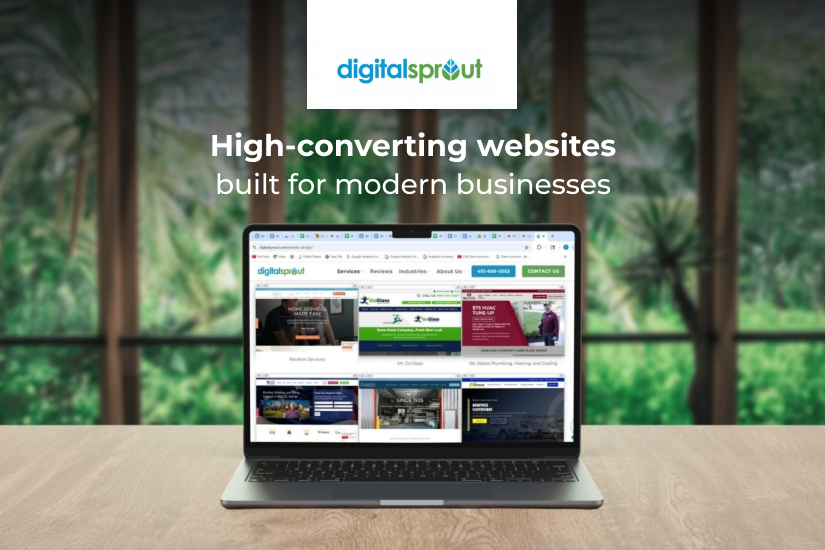
Digital Sprout is a results-driven website design company helping businesses build high-converting websites that generate real leads and long-term growth. Their approach combines modern design, SEO strategy, user experience optimization, and digital marketing to create websites that do more than just look good.
We understand that businesses need more than attractive visuals. They need websites that attract qualified traffic, engage visitors, and convert users into paying customers. That is why we focus on performance-driven website design, SEO strategy, content development, and conversion optimization.
From businesses in Maryland and Florida to companies across the country, we help brands improve visibility, strengthen their online presence, and generate consistent leads through smarter digital strategies.
Whether you need website design for lead generation, SEO improvements, paid advertising support, or a complete digital marketing strategy, Digital Sprout delivers solutions tailored to real business growth.
Contact Digital Sprout today to build a smarter, high-converting website designed to support long-term business growth and better online visibility.
Frequently Asked Questions
1. Why does my website get traffic but no leads?
A website may attract visitors but still fail to generate leads if it lacks clear messaging, strong calls-to-action, trust signals, or a user-friendly experience. Many businesses focus only on visuals and overlook important conversion elements like mobile optimization, page speed, SEO structure, and lead capture strategy.
2. How important is website design for lead generation in 2026?
In 2026, businesses need more than a visually attractive website. Modern consumers expect fast-loading pages, mobile responsiveness, clear information, and a seamless user experience. Website design for lead generation helps businesses turn website visitors into actual customers through strategic layouts, conversion-focused content, and optimized user journeys.
3. Can SEO help improve website conversions?
Yes. SEO does more than improve rankings. A strong SEO strategy attracts users who are actively searching for your services, making them more likely to convert. Effective SEO for small business also improves website visibility, local search presence, page structure, and content quality, all of which support higher lead generation.
4. What are the biggest reasons visitors leave a website quickly?
Common reasons include slow loading speeds, confusing navigation, poor mobile experience, cluttered layouts, weak content, and unclear calls-to-action. Users often leave within seconds if they cannot immediately understand what a business offers or how to take the next step.
5. How often should a business update its website?
Businesses should regularly update their website content, SEO strategy, and technical performance throughout the year. In most cases, a website redesign or major optimization review every 2 to 3 years helps maintain competitiveness, improve user experience, and align with changing search engine standards.
6. What makes a website more effective at generating leads?
High-converting websites typically include clear messaging, fast page speed, mobile optimization, trust-building elements, optimized service pages, strong CTAs, SEO-driven content, and easy contact options. A successful website should guide visitors naturally toward inquiries, bookings, or purchases instead of simply showcasing a brand visually.