

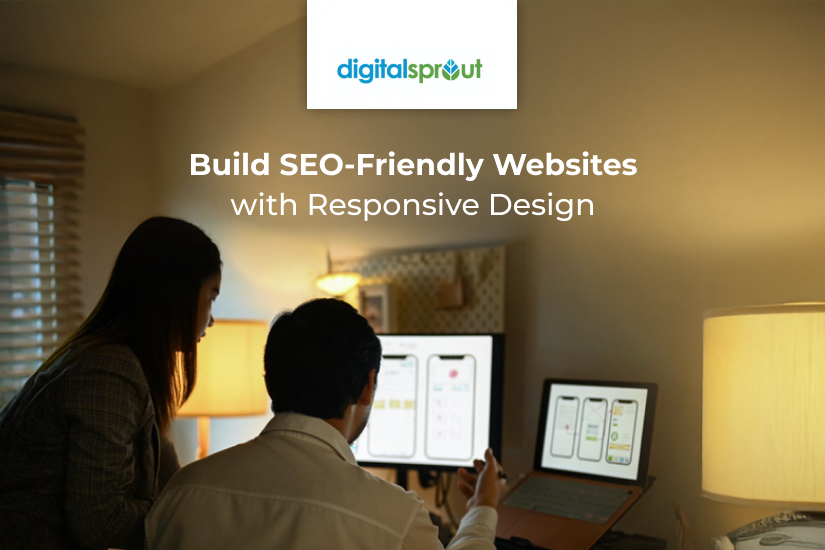
Mobile devices account for over 60% of global web traffic, and Google uses mobile-first indexing for all websites. That means that if your website doesn’t look and function well on mobile, your visibility will suffer, regardless of how strong your content may be.
A well-built responsive web design ensures your website adapts to various screen sizes seamlessly, providing users with a consistent experience. Combined with SEO best practices, this approach yields SEO-friendly websites that are fast, accessible, and optimized for search engine rankings.
What Is Responsive Web Design?
Responsive web design means your website adjusts its layout and content dynamically based on the device being used, such as a desktop, tablet, or mobile. The same codebase is served to all devices, with flexible grids and media queries modifying the visual structure.
Google recommends responsive web design because:
- It uses a single URL, making it easier to crawl and index.
- It improves page loading speed, which is a ranking factor.
- It enhances user experience by eliminating the need for redirects.
In short, responsive design makes your site mobile-friendly and SEO-ready, two critical priorities in today’s competitive online landscape.
How Responsive Design Improves SEO
1. Better User Experience = Lower Bounce Rates
Visitors form an opinion about your website in just 0.05 seconds. A site that loads slowly, has poor layout on mobile, or makes navigation difficult pushes users away. High bounce rates hurt SEO.
With a responsive, SEO-friendly website, you can retain visitors longer, guiding them to key actions, such as contacting you, purchasing a service, or reading more content.
2. Faster Load Times for Better Rankings
Site speed is a confirmed ranking factor in Google’s algorithm. Responsive websites often load faster because they’re optimized for mobile from the start, avoiding unnecessary redirects or large desktop-style images on small screens.
3. Simplified Link Building and Analytics
Having one version of your site helps streamline your backlink strategy and avoids link dilution. It also keeps your analytics and reporting in one place, making it easier to track SEO performance and user behavior.
Social Sharing and SEO Signals
A responsive web design supports social engagement, which indirectly benefits SEO. When users can easily view and share your content across multiple devices, it gains a broader reach. Shared content generates traffic, backlinks, and authority – all helpful for SEO.
Additionally, responsive websites tend to earn more social signals (likes, shares, retweets), which, although not direct ranking factors, do correlate with better performance on search engines.
Responsive Design and Mobile-First Indexing
Google has switched to mobile-first indexing for all websites, meaning it now prioritizes your mobile version when determining rankings. If your mobile site is difficult to navigate, loads slowly, or lacks content, your rankings will suffer, even if your desktop version is flawless.
With a responsive design, there’s only one version of the site to maintain, and it provides full content parity across devices, aligning perfectly with Google’s indexing priorities.
One URL, One HTML – Better Crawlability
Responsive websites use the same HTML and URL across devices. This makes it easier for search engine bots to crawl, index, and rank your pages without confusion or duplication errors.
This unified structure also consolidates your authority signals (links, shares, etc.) in one place, helping your site build stronger domain authority over time.
Future-Proof Your Business Website
A responsive, SEO-friendly website isn’t just about meeting Google’s current standards. It’s about creating a foundation that adapts to evolving algorithms, user behaviors, and device trends. As voice search, AI-based UX personalization, and local search continue to grow, having a mobile-optimized, fast, and accessible site becomes non-negotiable.
If your site still relies on outdated design principles or separate mobile versions, it’s time to upgrade. Responsive design isn’t a trend; it’s the backbone of successful digital strategy.
Ready to Build a Responsive, SEO-Friendly Website?
Digital Sprout is a trusted partner for businesses looking to improve their online presence through strategic design and SEO. Whether you’re in Annapolis or anywhere in the U.S., our team can help you create a responsive web design that ranks, converts, and grows your brand online.
Contact us today for a FREE consultation.